
Knowing He’s There is Enough
How a ceramics class and powdered milk landed me en route to Baffin Island

Every day is an ongoing thread of thousands upon thousands of causes and effects arisen by a preceding set of catalyzing circumstances. Many of these forces seem purely random, or at least unpredictable, while others are driven by an obvious impetus.
Perhaps this is precisely how a life takes shape. Our history becomes the culmination of both expected and surprising outcomes. I, for one, seem to be most content and at ease when I feel some sort of control, some kind of power, over the ensuing results. But these days I wonder, have I ever been really in control of anything? I don’t think I have.
The older I get, the more I am tuned into the subtle resonance of otherwise disparate patterns. Patterns that prove inextricable associations between things, and how, as Barry Lopez writes, “The indestructibility of these associations conveys a sense of permanence that nurtures the heart.” I am enthralled by patterns that prove, no matter our roles, that we belong. And deeply.
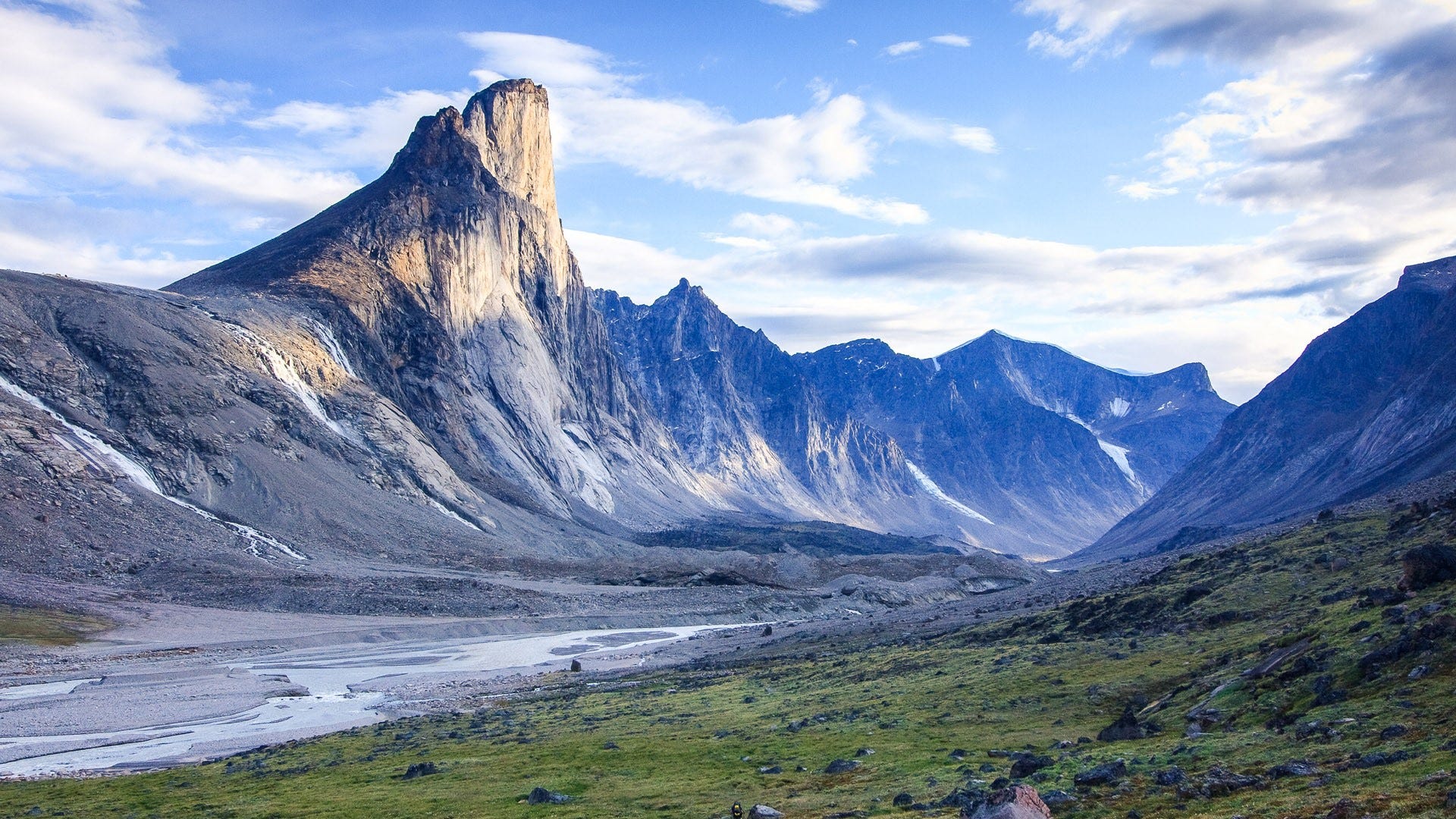
I’m considering all of this as I plan my August trip to northern Canada’s Auyuittuq National Park. For the first time in more than a decade, I’ll be adventuring with my oldest and best friend, Kent, with whom I previously traveled to many other far corners of the world.
Besides my family, Kent is one of the few constant beacons in my life. I can trace our friendship back to when I was a scant version of my current self. Back to before I took a long and hard look at who I was and made some big decisions about who I wanted to become.
Kent was the first person to whom I expressed a serious interest in walking across the United States. He didn’t gasp at the prospect of walking on the roadside for six months. In fact, he had similar aspirations of his own and wrapped up his transcontinental walk a few years before I completed mine.
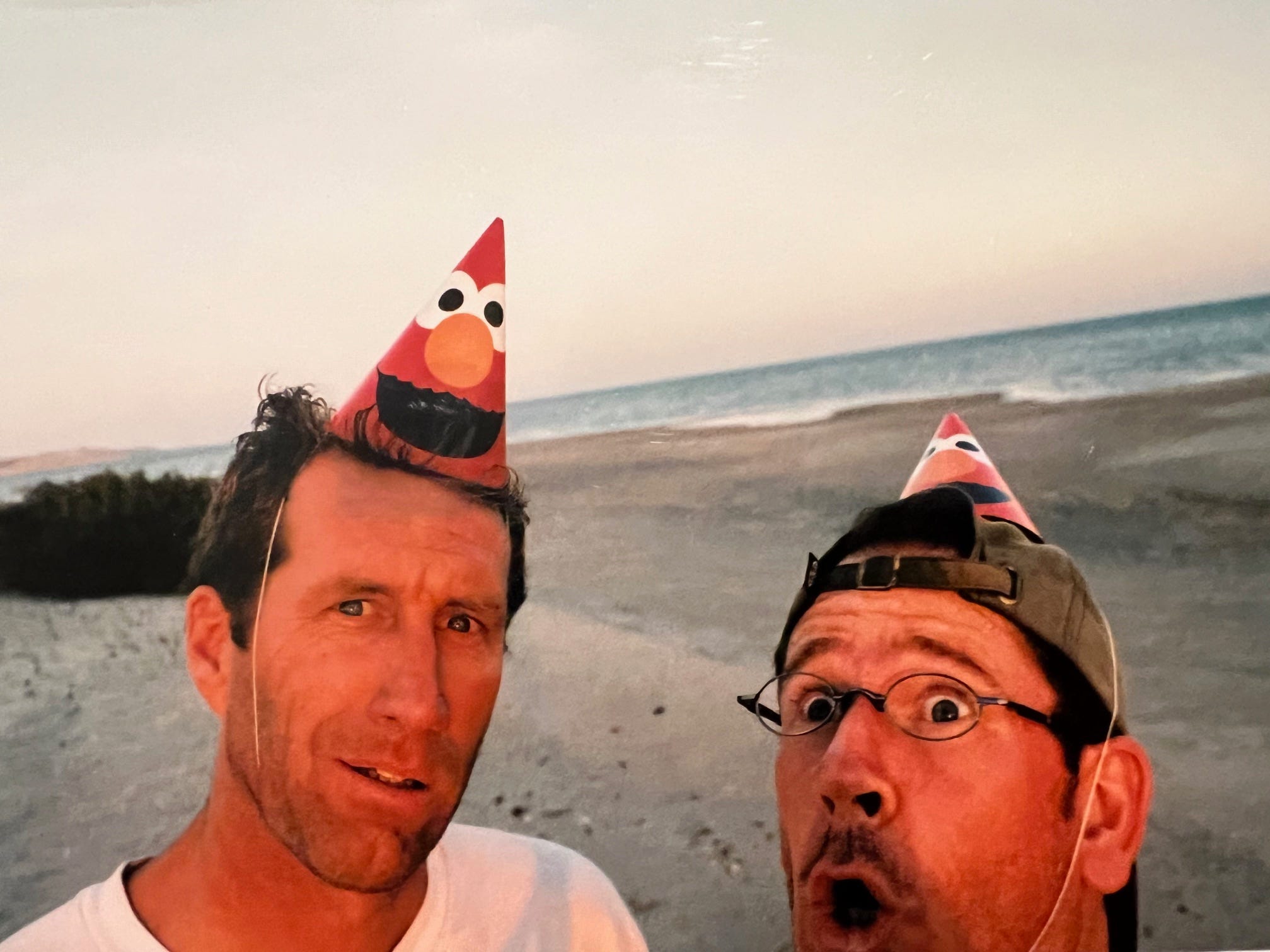
Like any long term connection, Kent has seen me at my best and worst. He’s one of the few people on this planet with whom I can be 100% myself, and with abandon. We’ve been a part of each other’s transitional growth moments. Perhaps not always as actively as we wanted to be, but still we’ve always managed to stay tethered. Just knowing he’s out there has been enough.
What follows below are some of the early converging patterns that energized Kent’s and my lifetime together. What a joy is to revisit it as I prepare for yet another journey into the unknown, albeit this time with polar bears.
As soon as I returned home from a four year Army enlistment, I enrolled full time at Goldenwest Community College in Huntington Beach, CA. My monthly GI Bill benefits covered tuition and books, even when I took extra classes. A woman I briefly dated gifted me a book on hiking trails in Southern California, and I filled my weekends soloing them using whatever gear I needed from my dad’s old backpacking stash from the 1960s.
After taking every English class the school had to offer, I registered for a beginning ceramic class. The class was held in an art studio, and on day one we all took seats at short and dusty stools positioned at an electric throwing wheel. “Say hi to the person across from you,” the grizzled professor mumbled. “They’re going to be your ceramics buddy for the semester.” The woman across from me introduced herself. “Hi, I’m Rona.”
Rona and I became fast friends. We built pots and vases together, collected leaves and twigs for a raku firings, and started hanging out after class to visit museums and restaurants that fit into our student budgets. One day Rona told me I needed to meet a guy she worked with at a local physical therapy office. “He’s going on a trip and I think you two should go together,” she said.
Shortly thereafter, Rona introduced me to Kent. He was tall and tanned—a surfer—and his long blond hair reminded me of a younger Roger Daltry. We exchanged numbers on the back of the PT’s business cards. After one subsequent phone call to sort out logistics, Kent picked me up at 4:00 a.m. in his rickety blue Toyota truck and off we went, southbound into the mysterious depths of Baja, Mexico.
We spent those wee hours driving into San Diego getting acquainted, then stopped at the border to acquire Mexican auto insurance and change money. “You didn’t bring a gun, did you?” Kent asked as we queued up to cross into Tijuana. I did not. I would not.
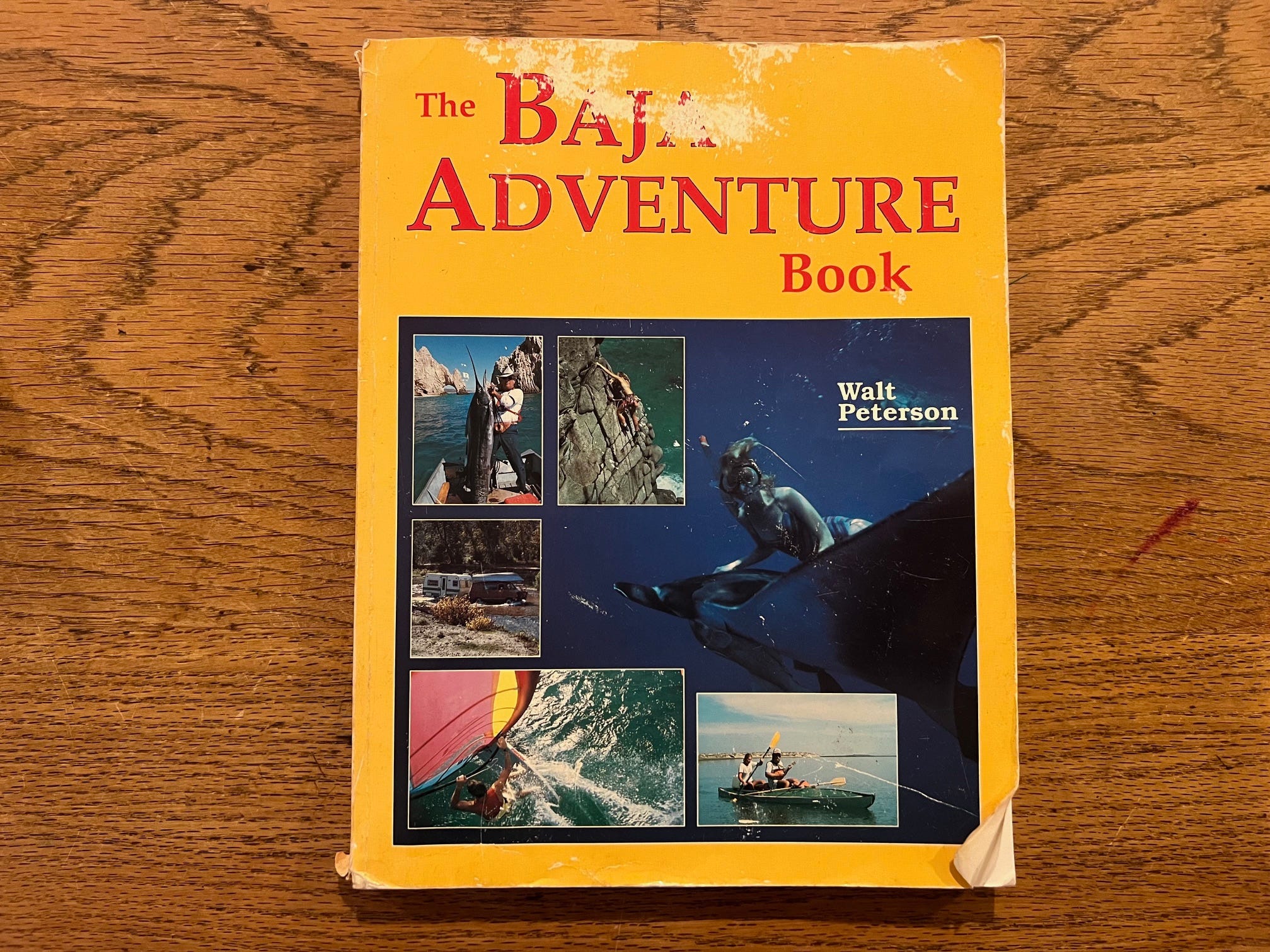
When we returned home, Kent gave me the 2nd edition of Walt Peterson’s seminal work, The Baja Adventure Book. Both of our copies accompanied us on every border crossing thereafter. We did many more together. Not only in Mexico, but also in Southeast Asia, China, Mongolia, and in the American Southwest.
Through the years Kent taught me a zillion new things: the names of shells, how to use a manual 35mm, the best ways to ask random people if we can park at their house for two weeks, and so much more. Together we sought out unknown and untouched areas where we found countless evidence of the preceding and often ancient cultures. Together our imaginations and lives grew wildly inspired. Together we fed our insatiable penchants to discover.
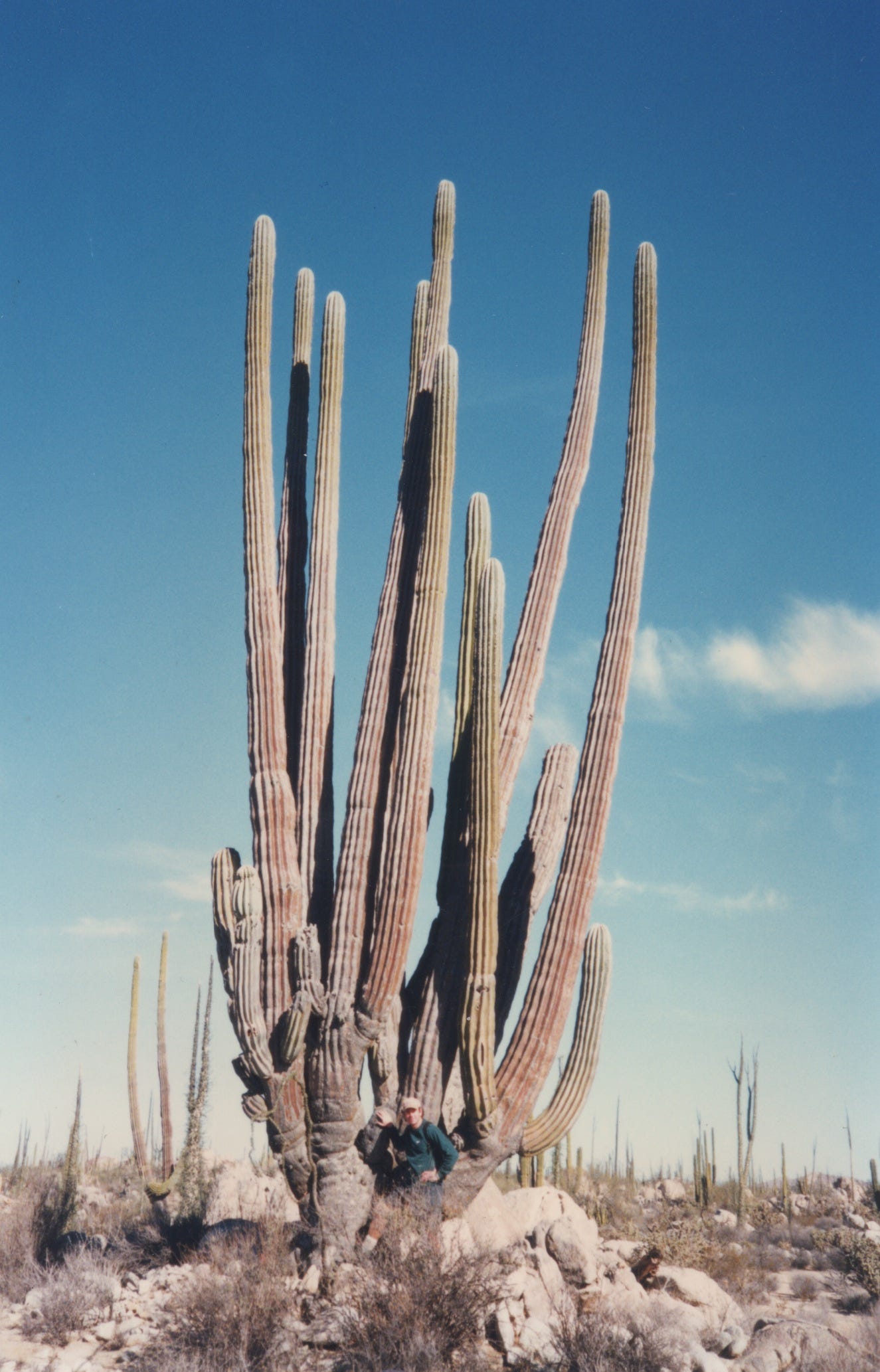
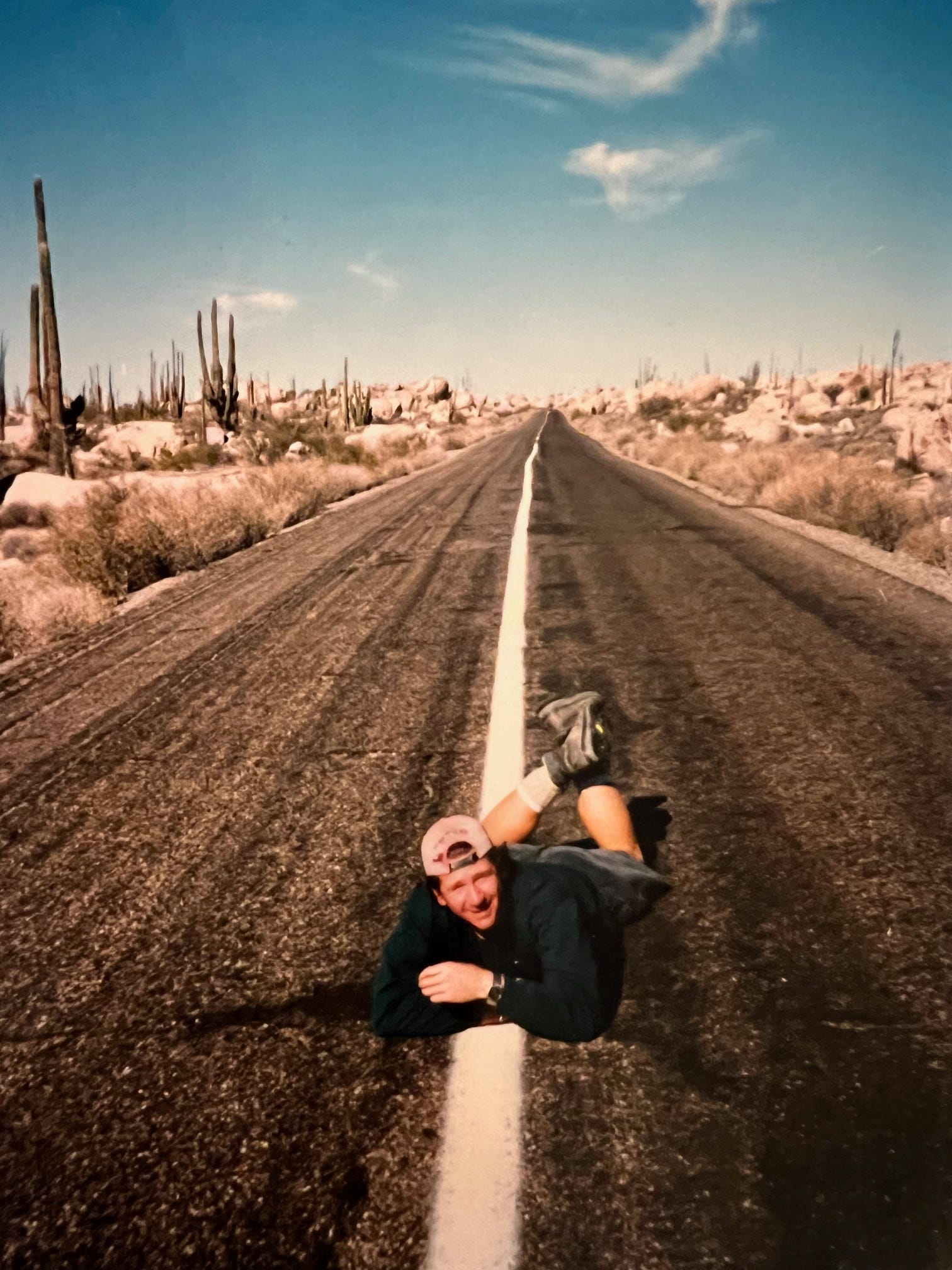
One one of the trips to Baja, our far south destination was to where California Grey whales give birth to their calves. We hadn’t seen a car in hours, just scrubby desert interspersed with reaching cardóns—a Mexican giant cactus that can grow up to a foot each year. The one 18-wheeler that did pass did so at a breakneck speed. We noticed a giant V-grate mounted on its grill, like on a train. We later asked a guy about it at a PEMEX station and he responded, “Vacas,” which means cows.
Military checkpoints were a given and always stirred up uncertainty. Soldiers clad in oversized uniforms and strapped with locked-and-loaded AK-47s were unpredictable. Sometimes they’d wave us on before we’d come to a complete stop and we’d continue our plummet into the desert. At other times they’d pull us to the side for a secondary inspection and instruct us to cut the engine. Usually that led to a preliminary glance at our bins of gear, sometimes a request to open this bag or that. They seemed, like so many airport TSA agents these days, to be acting out of muscle memory—going through the motions more out of boredom than anything else. Who could blame them?
We were not opposed to gifting these sequestered soldiers with distractions such as candy bars, trinkets from the dollar store, or an occasional pornographic magazine, but rarely did we remember to plan ahead for such exchanges.
On this day, the group of men at the checkpoint was larger than usual. They stood in a line across the road, holding fast until our brakes stopped squeaking. Unlike other times, they surrounded us. “A dónde va?” asked the man in charge—his smooth face suggested he was still a teenager. “Laguna San Ignacio,” Kent said. “Al sur.”
The soldier then asked, this time more brusquely, where we were coming from. “Estados Unidos,” Kent said. “Tiene armas or drogas?” he asked. No, we responded in unison. The soldier then asked us to open the back, so we exited the cab and walked around the vehicle. As soon as Kent unlocked and lifted the window, a group of men swarmed the back hatch and started disassembling our well-packed piles of food boxes and camping gear. We’d definitely need to do a proper repack.
As they carried out the inspection, I asked the commanding officer what sort of unit they were. “Infantería,” he said. He pointed to a guidon flag waving in the warm breeze beneath a comparatively monstrous Mexican flag. The red triangle was sewn with white letters saying, 28 BI. The twenty eighth battalion infantry. I told him I, too, had been a soldier. He was not impressed, and curiously looked over my head at something of interest in the truck’s hold.
I turned around just as one of the inspectors pulled out a gallon sized Ziplock filled with powdered milk. His incredulous face made it obvious what he was thinking, so I quickly answered the obvious question. “Es leche!” I said, assuring them the bag contained powdered milk. But they were not convinced. Kent chimed in. “Si, es leche!” he said. He made a motion as if drinking a sip then rubbed his belly to mime how delicious it is. The soldiers looked at each other, then at us. We needed to do better than that.
“Yo lo hago,” I said, and I reached for a camp cup and a liter of water. The inspecting soldier slowly handed over the Ziplock, and I eyeballed a couple tablespoons into the cup. I stirred in a few ounces of water, then added a little more. The group of men watched intently as I turned a bag of cocaine into a beverage, or so they thought. And when the mixture was just right, I held it up like an offering “Leche,” I said, then I took a sip.
I exaggerated my delight in the taste of instant milk. I passed the cup to Kent who also partook. “Aaahh, leche!” he exclaimed. Kent then handed the cup in the direction of the commanding officer. “Prueba la leche, señor,” Kent said. The men gazed at their leader—Would he do it? Would he drink the drug water? He cautiously extended his hand and took the cup. Kept his eyes trained on Kent as he dipped his tongue into the liquid. He then licked his teeth and lips as his brain registered the taste. “Leche?” he asked, as if to himself. He then looked at his men and repeated it with gusto. “Si, es leche!” he shouted as he handed the cup to another man.
Over the next half hour or so, Kent and I made cup after cup of instant milk for the men. They indulged in the chalky white liquid as if it was delicious, and their behavior and body language hinted to a sort of drunkenness. We shook hands, we hugged, we told stories about back home. We shared a moment together.
After we loaded up to drive away, I threw my torso out the window and shouted, “Veinte ocho B-I! The men joined in and echoed my words with fists and rifles in the air. “Veinte ocho B-I!” Kent hit the gas out and we exited the checkpoint, and our new drinking buddies, in a cloud of fast disappearing dust.
I finally downloaded the Substack app for this, and it did not disappoint. But no mention of Tickle Me Elmo?