

The effort to know a place deeply is, ultimately, an expression of the human desire to belong, to fit somewhere. - Barry Lopez, Embrace Fearlessly the Burning World
There’s a scene in the new documentary, Come See Me In the Good Light, when Andrea Gibson, poet and activist, is shown pacing their living room as they string together various utterances. They’re in the throes of writing a poem—lost in thought and movement as rays of the Colorado sun illuminate slices of furniture and floor.
The person behind the camera asks about this creative process, and Andrea says they’re trying to find sounds that go with a feeling. Until this is done, the poem is wordless. A wind slicing tall trees. A kestrel’s wing flap, it’s glide. Words blossom only after Andrea identifies sonic voices of their stirring emotions.
Only after this seeking, this wandering, does a message from heaven materialize. Only after the countless chin scratches, touches of walls and trinkets, a brush on the nape of a neck and a kiss, perhaps. Only after a glow of dusk brings the landscape inside. After closed eyes invoke wide open oceans and galaxies. Only then does the poem finally become. The process of this awakening is one that hinges on reciprocity. A giving and a taking.
We open, and we are fed.
Two weeks from now I’ll be a few days into another long haul on the Appalachian Trail. I’ll start where I left off back in 2023 at Harper’s Ferry, WV, then head northbound for just shy of six weeks. That won’t be enough time to reach the northernmost terminus at Mt. Katahdin, but it’s what I’m working with. And if this walk shakes out like my others have, I’ll at least make it to Maine. No matter where I end up, come June I’ll plant another flag in the sand and, at some point, hopefully soon, return to finally complete the thing.
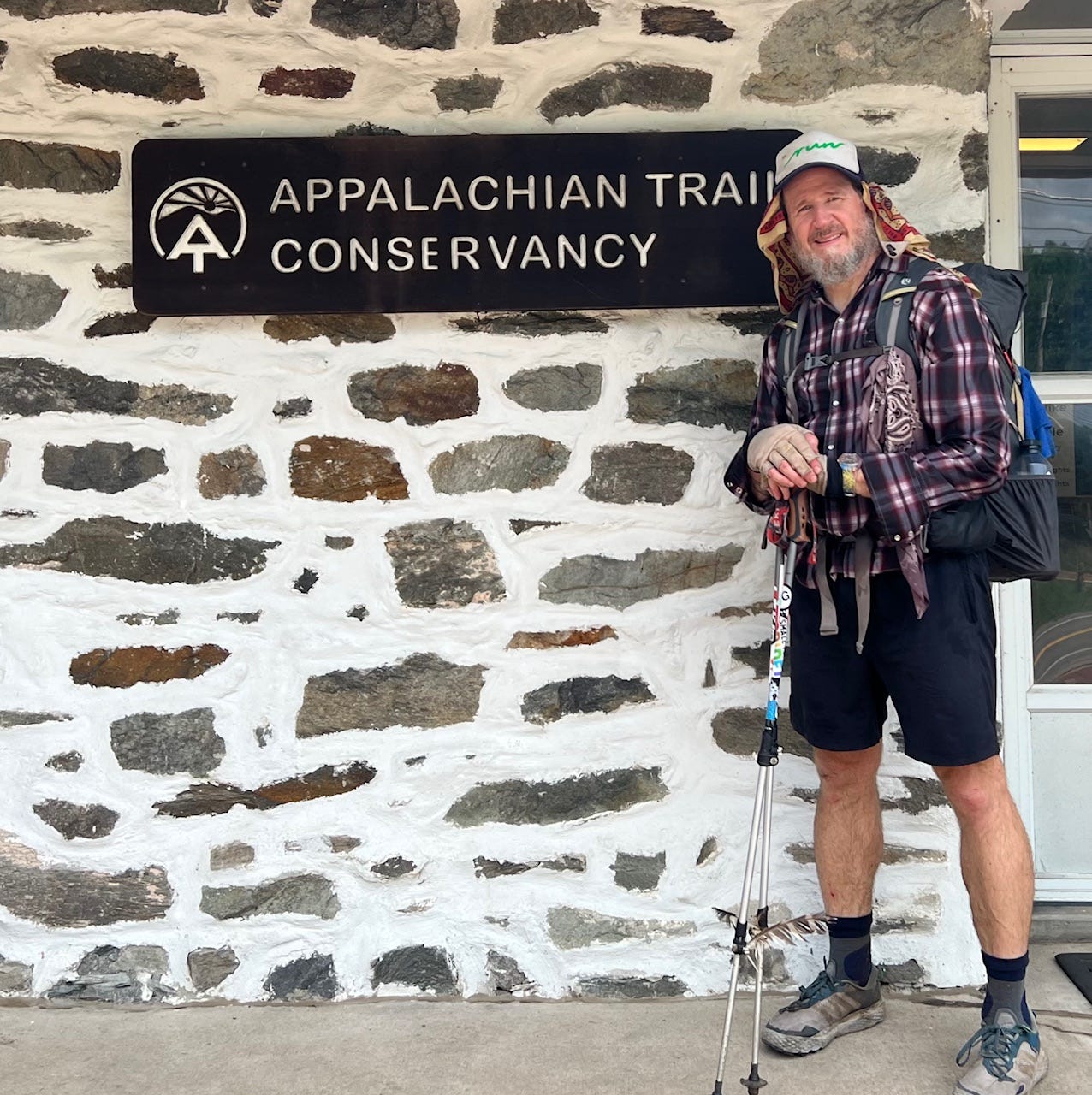
My original plan for 2025 was to do the entire trail in one swoop. I wanted to knock out all 2190ish miles in 100 days. Which I figured was doable since in my three previous section hikes, I’d made it to the unofficial halfway point in a total of 52 trail days (which included seven zeros, a.k.a. off days). My trail experience since then, however, has proven the superior value of a nero (a near zero) over an elongated break. A full day in town replete with soft mattresses, conditioned air, good WiFi, and repeated caloric excess, is always too much. It tends to kill momentum and nullify the intimacy of the trail.
So rather than take a day off every week, this time around I plan to take none, and instead I’ll indulge in one short walking day every seven days that ends in town with a gluttonous feast and a good night’s sleep in an actual bed. I’ll take a shower, do some laundry, call my people. That’ll be sufficient enough recovery. A nero, rather than a zero, will likely keep me from battling the loneliness that a long, lazy day most always conjures.
On the trail, my thoughts are clearer, my memory is better, and I am able to look forward, towards the future, with a certain optimism that’s sporadic otherwise. Walking tethers me to the world. To the land. The landscape. Each step chips away at the protective wall I’ve built through the years, and suddenly my interactions with people are real. Often profoundly so. But not “real” as in they happened, more like “real” as in they make a difference. Poignant and stirring.
When I walked across the US, I met countless people whose faces and names will be forever etched in my memory. I still keep in touch with a couple of these folks—like Ray, the owner of the tire store in Texarkana who gifted me with two sun-catching tchotchkes from his office windowsill: A green glass horseshoe inscribed with “Good Luck,” and a small, empty cologne bottle in the shape of a snail. “Yep, yep. ’Cause yur carryin’ all ya need on yur back,” Ray said in his slow, regional cadence.
There’s also Johnny Longnecker from Stuttgart, Arkansas. He drove past when I took a GPS shortcut through his field. Gave me a bottle of water from his mini cooler then we shared a halved sandwich from the lunch his wife made for him that morning.
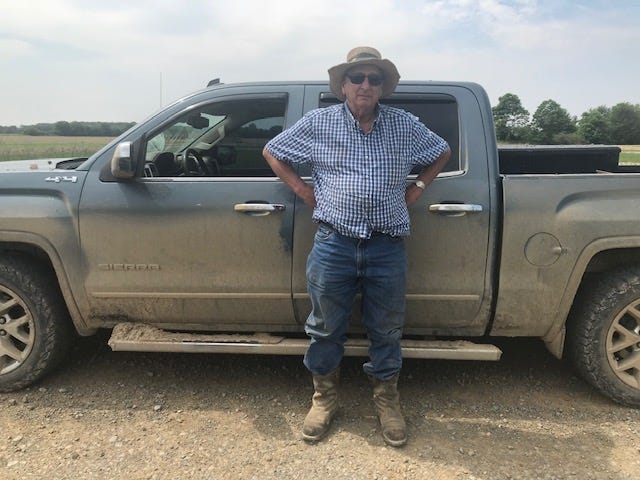
Johnny took my phone number and has called me about every six months since. He includes my name in nearly every spoken sentence. Calling to tell you about the chili cook off, Tom. How’s your mom holding up, Tom. His voice returns me to the endless expanse of fields that stretched before us as we leaned on his truck and got acquainted. His voice is the black rice birds that danced on the powerlines above us, the red mark on their chests flashing bits of color against the empty blue sky. Johnny’s voice is freshly turned soil, the smell of worms and rain, the suctioned squish of muddy puddles from the previous day’s deluge.
My last stretch on the AT was in June 2023. I squeezed it into a flurry of family chaos resulting from my father’s unexpected death three months prior. We’d held off on a funeral—delayed it unto July when my entire family had already planned to gather for our annual reunion. That two week walk on the trail was the first real chance I had to clear my head before we laid my dad to rest.
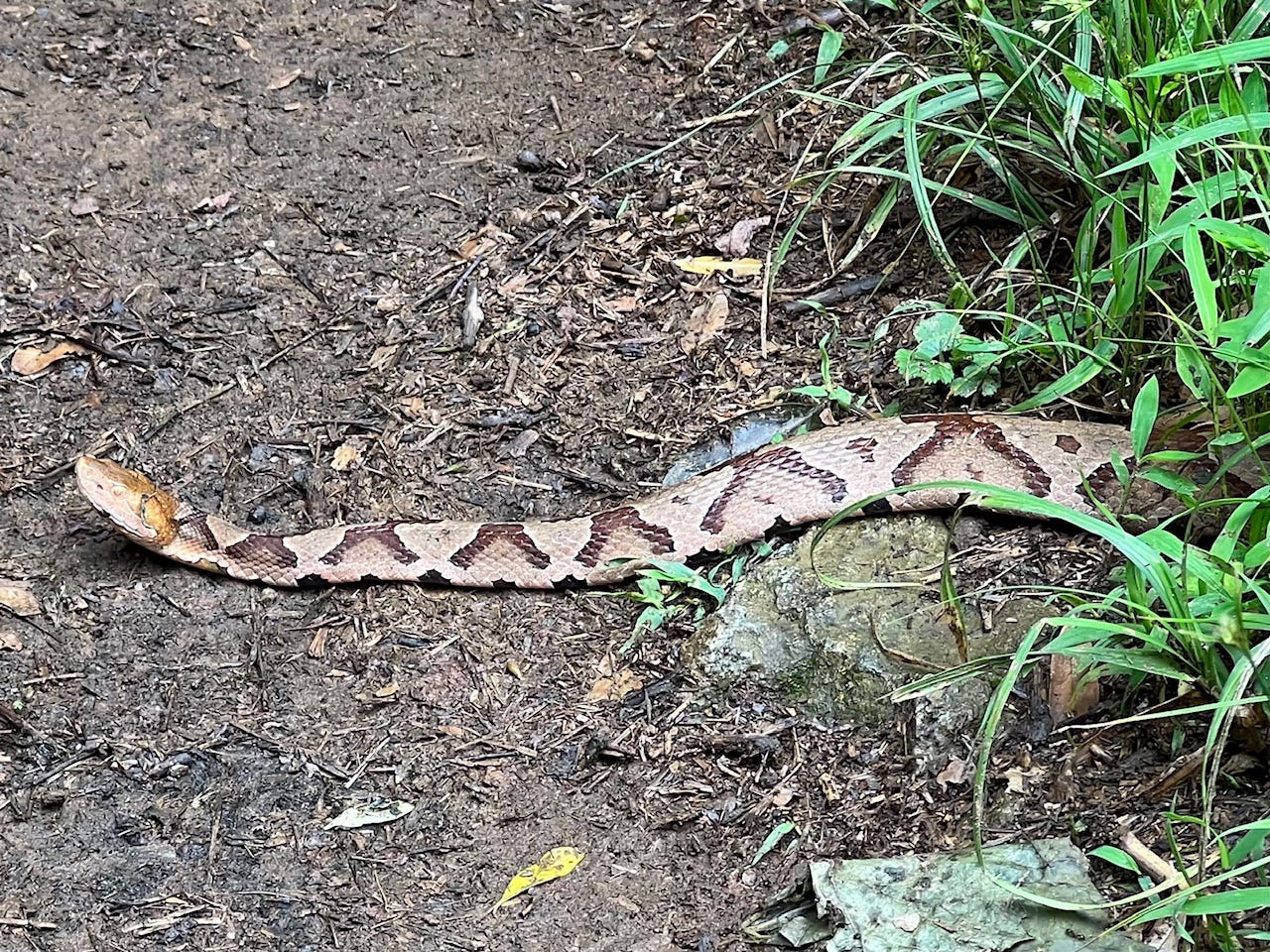
Unlike my other outings, I didn’t take many photos during that hike. While trudging from Big Island to Harper’s, I snapped a few token shots of a handful of stunning sunrises and nondescript campsites. I also took a series of a snake, perhaps a copperhead, stretched across the trail and unbothered by my approach. Its neck curved upward towards the relentless midday sun. As I stood back admiring its scale patterns—markings resembling a range of brown, shaded mountaintops, or maybe hourglasses, that became progressively larger down its widening belly—the snake’s yellowing and bunched head caught my attention. An encasement of old skin hugged its face like a sock. It was completing its ecdysis cycle, molting to remove damaged parts and accommodate new growth. The snake was becoming anew.
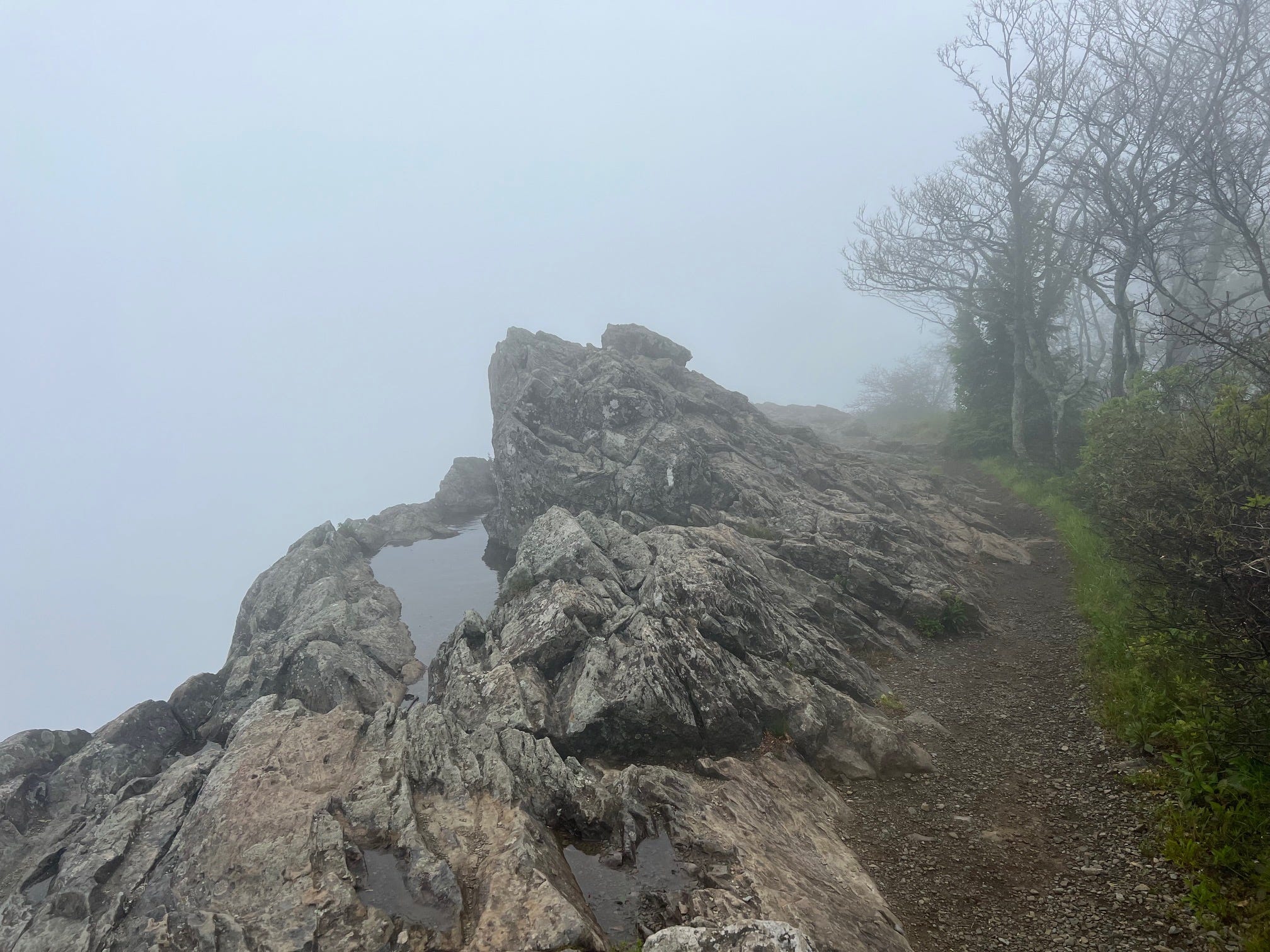
Ten days in, on a particularly rainy day that was thick with fog and slippery footing, I started humming a song. It was one I didn’t know. It resembled the sort of tune you’re likely to hear in an Irish pub. The kind that might inspire folks to look around and see where the song was coming from. To stop and listen. To ingest lyrics and music as one living thing. The kind of song that unearthed an ageless melancholy. A reminder, perhaps, that we’re all goners. That what we’ve done, or what we will do, matters less that what we’re doing.
The song appeared in my ears as if I’d crossed a threshold that made it suddenly audible. For the next few miles I hummed it, then sang it. Then, out of fear I would forget it, I recorded the tune and words as an iPhone voice memo.
Various bits of the song made me cry, and when I listen to it now I can hear the breaks in my voice. The jumps and cracks, the pauses and caught breaths as I sang the doleful and swirling narrative that had been playing out in my being since I got that call from my mom. “Oh Tom,”she pleaded. “He’s gone. Please hurry.” She gave the phone to an EMT who calmly said, “Your father has died,” using unmistakable language my mom wasn’t able to find.
For months I’d been holding it together. But I wish I had known it was OK to wail. To unleash a bleeding howl of mourning. To connect the depths of my insides—a voice I am often reluctant to display with honest or unapologetic expression—with all that’s racing away. I wish I had anguished in tones to perk the ears of ghosts. I wish my father had heard me scream.
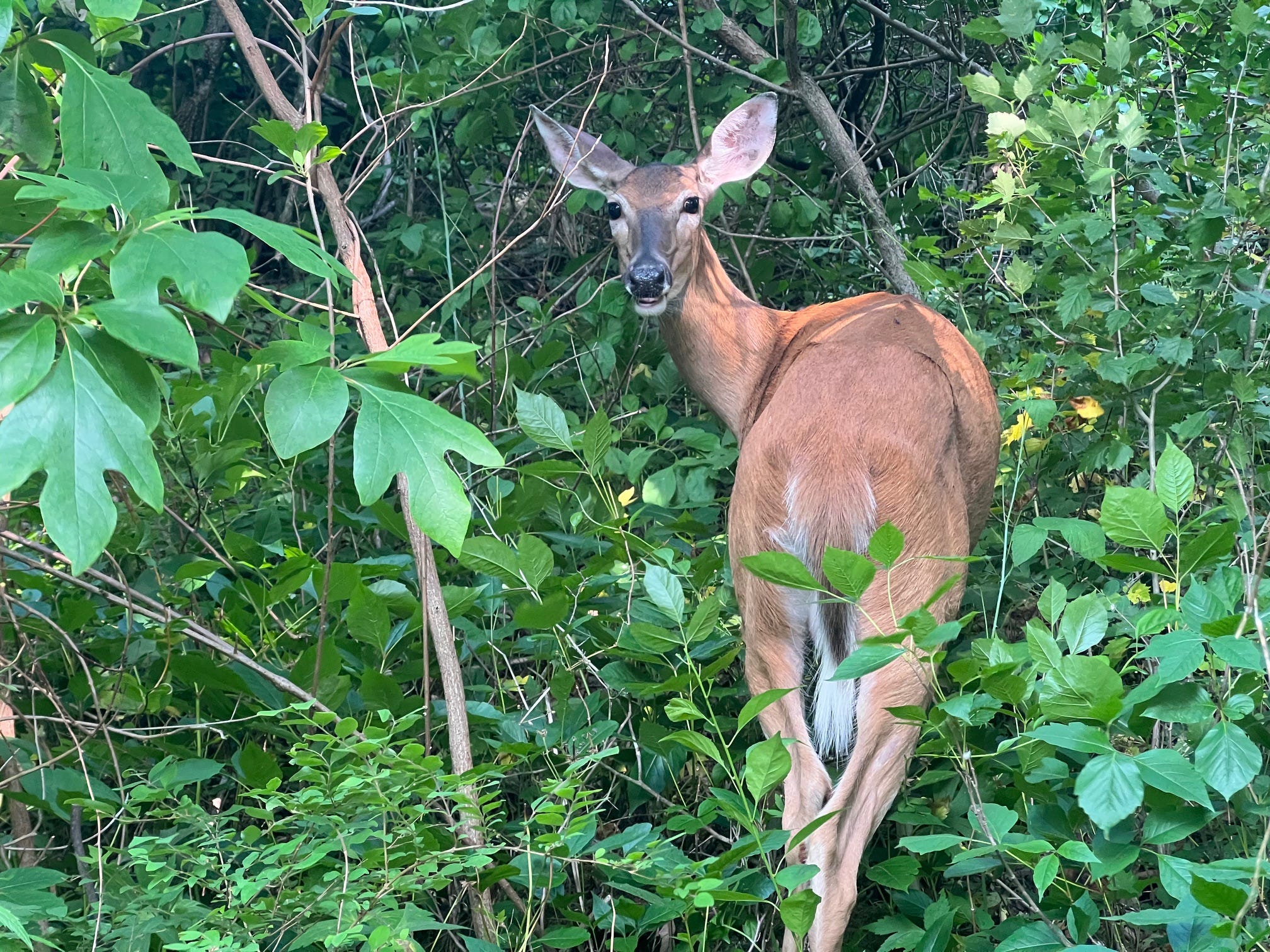
I climbed the rooted wet earth, coursing switchbacks and creeks. I brushed ferns and untamed foliage as I finally let free what desperately needed out. I screamed and screamed, not caring who’d hear. And in my festering, my flood of tears, I saw more wildlife in that short stretch of muddy single track than I’d ever before seen on the trail. They stood unspooked, didn’t budge as I moved like an aching parade. They watched me, a thunderous animal, as I lumbered into their space and passed through, choking out lyrics to an unknown song between anguished sobs.
That night I spent way too much money to stay at Big Meadows Lodge in Shenandoah National Park. Splurged on a tourist’s room that was big enough to hang all my wet gear out to dry, then paid a small fortune to recivilize myself with an overrated burger, some sweet potato fries, and an extra large slice of their touted blackberry ice cream pie.
In the privacy of my room, I listened to the audio recordings and transcribed stanzas of lyrics to the song I’d sing at my dad’s memorial the following month. It was simple and sentimental, cliched and wrought with generic metaphors. But still, it was just right. Because if my father was a song, it would be this one:
No one knew your plan, old man
Or when your ship was leaving
But early on that cool March morn
Was when we started grieving (x2)

Undid the knots you knew so well
You could do them in your sleep
Then up and down the tide-made swell
Out to the ocean’s deep (x2)

Your voice now back to baritone
Your body free from aching
Your strong hands on the wooden wheel
To set the course you’re taking (x2)

So find a line and hold it true
And keep a candle burning
It’s flicker on the rippling sea
Will help us when we’re yearning (x2)

No one knew your plan, old man
And now we’re here together
To say goodbye, wish you calm seas
Until the after ever
Until our after ever
There’s so much here to ingest — a delicious warmth and sweetness to which we all can relate. I remember being so absorbed into the trail my pain would rush in waves. I would stumble and rail against the tether while floating into the abyss of isolation. It’s good medicine. Drink it up, carry it with you, and share the salve.
“Only after a glow of dusk brings the landscape inside. After closed eyes invoke wide open oceans and galaxies.”
I love it.
I love you, my forever friend
Your song is beautiful. Thank you for sharing.